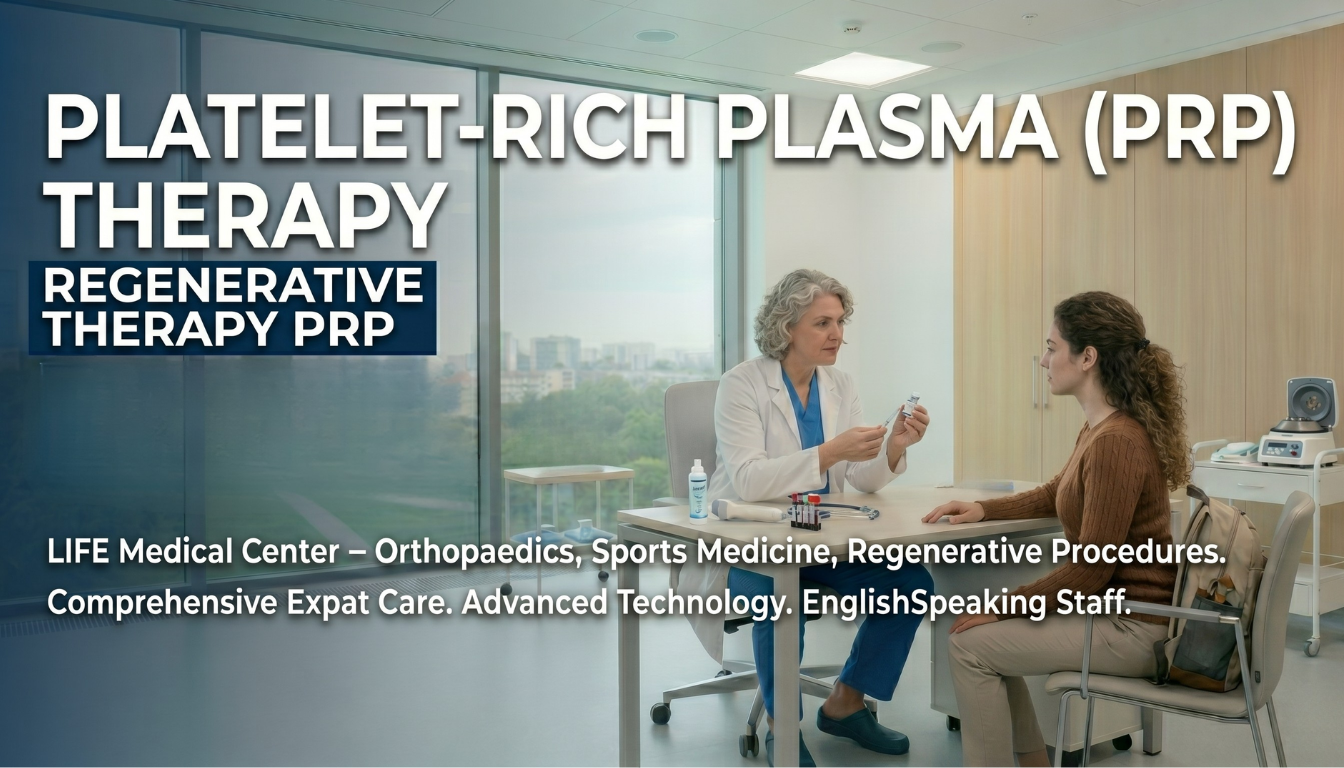
PRP (platelet-rich plasma) therapy uses a concentrated sample of a patient’s own platelets injected into injured tissue to promote healing; the outpatient procedure involves a blood draw, centrifugation to isolate PRP, then a guided injection into the target area. It is generally safe because it uses the patient’s own blood and has supporting evidence for specific conditions such as certain tendon injuries and knee osteoarthritis when performed by trained clinicians.
| Regenerative Therapies — PRP (Platelet-Rich Plasma) | ||
|---|---|---|
| Service | Type | Price |
| PRP ARTHREX ACP™ (Platelet-Rich Plasma) – 1 injection | Treatment | from 1200 zł |
| PRP ESSENTIAL (Platelet-Rich Plasma) – 1 injection | Treatment | from 1050 zł |
| PRP ESSENTIAL – Consultation + Injection | Konsultacja | from 1400 zł |
| PRP Platelet-Rich Plasma – Face | Treatment (Life Beauty) | from 1000 zł |
*Prices are in accordance with the current LIFE Medical Center price list. Examinations are performed without a referral.
What is PRP therapy and how does it work?
PRP therapy (platelet-rich plasma therapy) concentrates platelets from the patient’s own blood to create a biologically active injection that may support tissue repair. The basic principle is that platelets contain growth factors and signalling molecules that can modulate inflammation and stimulate local repair processes in tendons, ligaments, cartilage and skin. PRP is used in orthopedics, sports medicine and aesthetic medicine (for example PRP for tendon injury, PRP knee injection and PRP for hair or skin rejuvenation).
What is platelet‑rich plasma?
Platelet-rich plasma is autologous plasma with a higher-than-baseline platelet concentration after a blood draw and centrifugation. Preparation methods vary (single-spin or double-spin systems) and different commercial kits (e.g., Arthrex ACP) produce preparations with differing platelet and leucocyte content; clinicians select systems based on the clinical target and available evidence.
Why use PRP — what is the biological rationale and what are common uses?
PRP provides a local source of growth factors (e.g., PDGF, TGF-β, VEGF) that can reduce catabolic inflammation and promote matrix remodelling. Common uses include chronic tendon injuries (e.g., lateral epicondylitis, Achilles tendinopathy), knee osteoarthritis (intra‑articular PRP knee injections), ligament sprains, muscle injuries and certain dermatologic or hair loss indications (PRP for scalp). The choice of PRP treatment should follow clinical assessment and imaging when needed.
How is a PRP injection performed step‑by‑step?
What happens at the initial consultation and how is the target diagnosed?
The initial visit includes a clinical history, physical exam and targeted imaging if needed — commonly ultrasound for tendons or joints, or MRI when structural detail is required. The clinician will confirm indications (for example PRP for tendon injury vs degenerative joint disease) and discuss realistic outcomes based on current evidence.
How is PRP prepared from a blood draw and centrifugation?
PRP preparation begins with a small blood draw (typically 15–60 ml depending on kit). The sample is centrifuged to separate red cells, platelet-poor plasma and platelet-rich plasma. The operator extracts the PRP fraction under aseptic conditions and prepares it for injection; the entire autologous process takes about 15–30 minutes.
How is the injection delivered — is guidance used and which areas are treated?
Precise delivery is important; ultrasound guidance is recommended for tendons, ligaments and intra‑articular injections to place PRP accurately into the lesion. Typical targets include the knee joint (PRP knee injection), rotator cuff, Achilles tendon, lateral elbow, and scalp for hair restoration.
How long does a typical session take and what happens immediately afterwards?
An appointment usually lasts 30–60 minutes including consultation, blood draw and injection. After the injection, the treated area is observed briefly and patients receive written aftercare instructions, usually including activity modification and pain control guidance.
Which conditions can PRP treat?
Can PRP help knee pain and osteoarthritis?
Multiple randomized trials and meta-analyses indicate PRP can reduce pain and improve function in mild-to-moderate knee osteoarthritis compared with placebo or hyaluronic acid in some patient groups. Results are heterogeneous, and benefit size varies by PRP preparation and patient factors; shared decision-making with an orthopedic specialist is essential.
Is PRP effective for tendon injuries like tennis elbow, Achilles or rotator cuff?
Evidence supports benefit of PRP for certain chronic tendinopathies, particularly lateral epicondylitis (tennis elbow) and some cases of Achilles tendinopathy. For rotator cuff pathology, PRP may help in select indications but results are mixed; ultrasound-guided PRP injections targeted to the tendon lesion are standard practice.
Can PRP treat ligament injuries and sports-related injuries?
PRP is used as an adjunct in some ligament sprains and select muscle injuries to support healing, although high‑quality evidence varies by condition. Treatment is typically combined with physiotherapy and staged rehabilitation.
Is PRP used for plantar fasciitis and back pain?
PRP can be considered for recalcitrant plantar fasciitis and some localized spine or facet pain protocols, but patient selection and imaging-confirmed indication are important because response rates vary.
What does the research say — is PRP evidence‑based?
What does clinical evidence show by condition?
Systematic reviews demonstrate moderate-quality evidence for PRP in specific indications such as lateral epicondylitis and knee osteoarthritis, with benefits in pain and function for some patients. For other conditions the data are inconsistent — heterogeneity in PRP preparation, injection protocols and outcome measures limits broad generalizations.
What outcomes can patients reasonably expect?
Patients can expect gradual improvement: pain reduction and function gains often emerge over weeks to months, typically peaking between 6–12 weeks and continuing up to 6–12 months. Not all patients respond and some will require adjunctive treatments or alternative management.
Is PRP therapy safe and what are the risks?
What common side effects and rare complications should patients know about?
Common short-term effects include injection site pain, transient swelling and mild bruising. Because PRP is autologous, allergic reactions are rare; infection is a low-probability but possible complication when aseptic technique is not followed. Serious adverse events are uncommon when procedures are performed by trained clinicians.
Is PRP safer than steroid injections?
PRP avoids corticosteroid systemic effects and repeated steroid exposure can weaken tendons and cartilage. For some tendinopathies and osteoarthritis, PRP may offer longer-term benefit with fewer tissue‑detrimental effects; however, steroids provide faster short-term pain relief for many patients, so the choice depends on goals and risk profile.
How should I prepare and what is recovery like?
How should I prepare before a PRP injection?
Prepare by avoiding nonsteroidal anti‑inflammatory drugs (NSAIDs) for several days before the procedure if clinically safe — paracetamol is usually permitted. Avoid heavy exercise the day before and inform your clinician about medications, anticoagulants and any active infection.
What immediate aftercare is recommended in the first 48–72 hours?
Expect mild soreness; rest and ice for short-term symptom control are typical. Clinicians usually advise avoiding NSAIDs for a week or so to not blunt biological signalling, and to follow a graded activity plan coordinated with physiotherapy if relevant.
How long until I can exercise and how much downtime is needed?
Downtime depends on treatment area and indication: for tendon injections light activity modification for 1–2 weeks and progressive loading guided by a physiotherapist is common. Return to sport or heavy duty may take several weeks; your treating physician will provide a personalised rehab timeline.
How many PRP injections are typically needed and how often?
Protocols vary: a single injection can be effective for some indications, while others use a series of 2–3 injections spaced 2–6 weeks apart (for example PRP injection therapy for chronic tendinopathy). The optimal number depends on the condition, imaging findings and clinical response.
What is the cost and are private options available?
Costs at LIFE Medical Center vary by preparation and whether consultation is included — sample prices are shown above. PRP treatment is available privately and is usually paid out‑of‑pocket; the clinic team will outline the proposed protocol and total expected cost during the consultation.
Who is a good candidate and what are contraindications?
Good candidates are patients with symptomatic tendon injuries, early-to-moderate knee osteoarthritis or carefully selected soft tissue problems who have failed conservative therapy and want an autologous regenerative option. Contraindications include active infection at the injection site, platelet disorders, certain blood dyscrasias and uncontrolled systemic illness; discuss individual suitability during the consultation.
Why choose LIFE Medical Center for PRP therapy?
What clinical protocol, safety measures and guidance do you use?
At LIFE Medical Center PRP injections are performed by trained specialists using aseptic technique and, when indicated, ultrasound guidance to ensure accurate placement. Patients receive a clinical assessment, explanation of expected outcomes, and a tailored rehabilitation plan focusing on patient safety and evidence-based practice.
Who are the specialists and what experience do they have?
Our teams include orthopedists, physiotherapists and medical specialists experienced in musculoskeletal and regenerative procedures. Therapy plans are coordinated between clinicians to align imaging findings, functional goals and the best available evidence for a given condition.
How can I book a consultation?
To discuss PRP therapy, request an assessment or learn whether PRP is appropriate for your condition, contact LIFE Medical Center and schedule an appointment with an orthopedic or regenerative medicine clinician. A targeted consultation with ultrasound when needed will clarify indications, risks and a personalised plan.
Najczęściej zadawane pytania (FAQ)
What is PRP therapy and how does it work?
PRP is made from a patient’s own blood and contains concentrated platelets with growth factors. It is injected into injured tissue to support healing and modulate inflammation; the procedure includes a blood draw, centrifugation and an image‑guided injection.
Is PRP therapy safe and evidence‑based?
PRP is generally safe because it is autologous, and there is moderate evidence for benefit in certain tendon injuries and knee osteoarthritis. Effectiveness varies by condition, PRP preparation and patient factors, so treatment should follow specialist assessment.
How is a PRP injection performed step‑by‑step?
The procedure usually includes a consult and exam, blood draw, centrifugation to separate PRP, and ultrasound‑guided injection into the target tissue; total appointment time is typically 30–60 minutes.
How many PRP injections will I need and how often?
Protocols differ: some patients benefit from a single injection while others require 2–3 injections spaced several weeks apart. The treating clinician recommends a plan based on diagnosis and treatment response.
How long does PRP take to work and how long do results last?
Improvement is typically gradual with pain and function gains over 6–12 weeks; benefits may last months but vary by condition and patient. Follow-up and rehabilitation influence long-term outcomes.
How much does PRP therapy cost and do I need a referral?
Prices depend on the PRP system and whether consultation is included — sample prices are shown above in the cennik. No formal referral is required to receive treatment at LIFE Medical Center; schedule a consultation directly by phone.
Take care of your health today.
Book your examination: +48 22 255 32 55 Location: 43a/U10 Grzybowska, Warsaw.