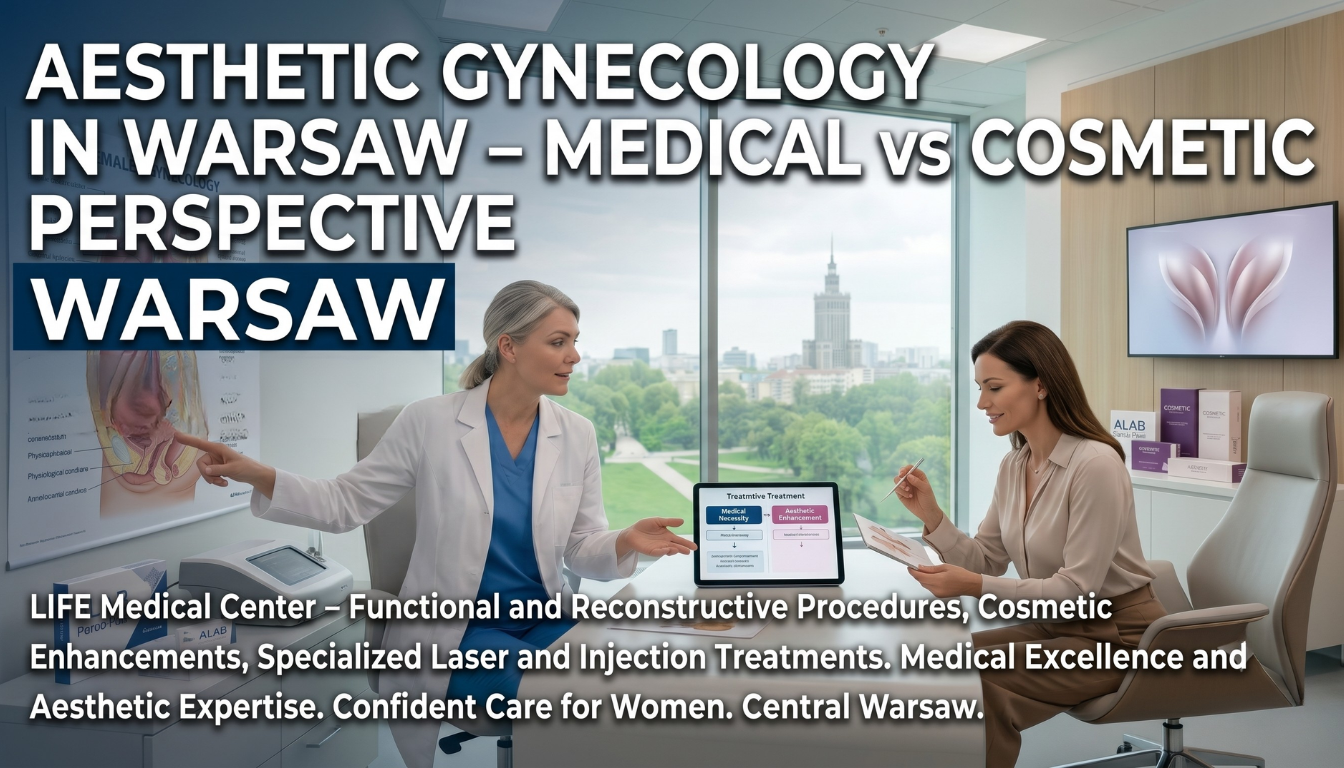
Aesthetic Gynecology in Warsaw — Medical and Cosmetic Perspective
Aesthetic gynecology in Warsaw includes both medical and cosmetic procedures — from labiaplasty and vaginal laser rejuvenation to treatments for GSM and stress urinary incontinence — performed in private clinics by qualified gynecologists. LIFE Medical Center emphasizes evidence-based indications, patient safety, and individualized care with English-speaking specialists to determine medical necessity and expected outcomes.
| Gynecology – Therapy & Procedures | ||
|---|---|---|
| Service | Type | Price |
| Gynecological & Obstetrical Consultation | Consultation | from 250 zł |
| Labiaplasty – Surgical correction of labia minora / majora | Treatment | from 5000 zł |
| Laser Vaginal Rejuvenation | Treatment | from 2500 zł |
| PRP Vaginal & Perineal Injection (ANGEL) | Treatment | from 2400 zł |
| O-Shot (Orgasmic Shot) – Intimate area rejuvenation with PRP | Treatment | from 2000 zł |
*Prices are in accordance with the current LIFE Medical Center price list. Examinations are performed without the need for a referral.
What is aesthetic gynecology and how does it differ from cosmetic gynecology?
Aesthetic gynecology is an umbrella term that covers both procedures performed for medical indications (for example, correction of congenital malformations, repair after trauma, or treatment of symptomatic labial hypertrophy) and procedures done primarily for appearance or sexual function. Cosmetic gynecology typically refers to interventions aimed mainly at altering appearance or enhancing sexual satisfaction, while medical gynecologic procedures address functional problems such as pain, recurrent infections, or obstructive anatomy. At LIFE Medical Center we assess each case to determine whether the indication is medical, functional, cosmetic, or mixed.
When should I consider an aesthetic or intimate aesthetic treatment in Warsaw?
Is my concern functional, medical or cosmetic?
Consider an aesthetic gynecology consultation when symptoms affect daily life — pain during intercourse, chronic irritation, urinary leakage, or vaginal dryness — or when anatomy causes psychological distress. Some patients seek treatment purely for cosmetic reasons, such as asymmetry or unwanted tissue excess; others have combined concerns (e.g., labial hypertrophy causing friction and embarrassment). The first step is a careful medical assessment to establish goals, risks and realistic outcomes.
Who is a candidate for labiaplasty and what are realistic expectations?
Candidates for labiaplasty are adults with persistent discomfort from enlarged or asymmetrical labia minora/majora, recurrent irritation, or those whose symptoms affect sexual function or self-image. Realistic expectations include improved comfort, reduced chafing, and typically good aesthetic results with scars placed to be as inconspicuous as possible; sensation changes are uncommon but may occur. A thorough preoperative discussion and informed consent are essential to tailor the technique to your anatomy and goals.
What are the common gynecological aesthetic procedures available in Warsaw?
Does labiaplasty have established techniques and outcomes?
Labiaplasty techniques include edge trimming, wedge resection and central/vertical reduction; each carries specific pros and cons regarding contour and sensation. Evidence shows patient satisfaction is high when procedures are performed by experienced gynecologic surgeons and when preoperative expectations are realistic. At LIFE Medical Center we choose the method that preserves natural anatomy and optimizes function and cosmesis.
Does vaginal rejuvenation work and what are surgical vs non-surgical options?
Vaginal rejuvenation refers to surgical tightening (colporrhaphy) and non-surgical energy-based therapies (laser, radiofrequency) aimed at improving vaginal laxity, GSM symptoms, or tissue trophicity. Surgical repair offers predictable mechanical tightening for pelvic support defects, while laser or RF treatments (e.g., fractional CO2, photothermal RF) may improve mucosal health and reduce symptoms of vaginal dryness, mild laxity and atrophic changes. Clinical evidence supports symptomatic benefit in selected patients, but outcomes depend on indication, device, number of sessions and concomitant therapies.
What regenerative options like PRP or hyaluronic acid provide?
Regenerative approaches include platelet-rich plasma (PRP/O-Shot/ANGEL) and hyaluronic acid injections for local tissue hydration and remodeling. PRP delivers autologous growth factors that can support tissue repair; hyaluronic acid provides immediate volume and lubrication. While patient-reported improvement is common for sexual response and local dryness, scientific data vary and repeat treatments are often needed; these options are presented as part of an individualized care plan.
Can aesthetic gynecology treat medical problems such as GSM, vaginal dryness and stress urinary incontinence?
How can treatments for GSM and vaginal dryness be combined?
Genitourinary syndrome of menopause (GSM) and vaginal dryness are treated with evidence-based options: local estrogen therapy, non-hormonal moisturizers, pelvic floor physiotherapy, and when appropriate, energy-based therapies or hyaluronic acid injections. Treatment choice is guided by symptom severity, desire for hormone therapy, contraindications and patient preference. LIFE Medical Center integrates medical therapy with supportive procedures (e.g., laser vaginal rejuvenation) when indicated.
Are stress urinary incontinence treatments effective and what conservative options exist?
Stress urinary incontinence (SUI) often responds well to pelvic floor muscle training and physiotherapy; minimally invasive procedures (e.g., sling surgery) are reserved for persistent cases. Energy-based approaches or RF may provide modest improvement in selected patients; however, surgical repair remains the most durable treatment for significant stress incontinence. Our approach emphasizes pelvic floor therapy and structured assessment including uroflowmetry or referral to urology when needed.
What are the risks and how is patient safety ensured?
What common risks and complications should I expect and how are they managed?
Common risks across aesthetic gynecology procedures include bleeding, infection, scarring, asymmetry and altered sensation. Specific interventions have procedure-specific risks (e.g., mesh-related issues in some pelvic surgeries). LIFE Medical Center follows evidence-based protocols: preoperative assessment, sterile technique, perioperative antibiotics when indicated, documented informed consent, and scheduled follow-up to identify and treat complications early.
How do we assess medical necessity versus cosmetic desire?
Assessment includes symptom history, physical exam, functional testing (e.g., uroflowmetry), and patient goals. Medical necessity typically applies when symptoms impair function, cause pain or recurrent problems, or when reconstruction is required for anatomical defects. Cosmetic desire is recognized as legitimate but requires clear counseling about benefits, limitations and alternatives; both types of care are delivered with the same safety standards.
How should I choose an aesthetic gynecologist in Warsaw?
What credentials, teams and accreditation should I look for?
Look for a board-certified gynecologist with documented experience in genital surgery or energy-based gynecologic therapies, hospital privileges for surgical procedures, and clinic accreditation. Multidisciplinary teams (urogynecology, pelvic floor physiotherapy, anesthesia, and psychological support) improve outcomes and safety. LIFE Medical Center provides multidisciplinary follow-up and English-speaking specialists for international patients.
What questions should I ask at my first consultation?
-
- What is your experience with this specific procedure and outcome statistics?
-
- What are the realistic results, alternatives and potential complications?
-
- How many treatments or follow-up visits are typically required?
-
- What is the recovery timeline and pain management plan?
How do I prepare for a consultation, procedure day and recovery?
What does pre-op evaluation, consent and realistic outcome planning include?
Pre-op evaluation includes medical history, medication review, targeted exams, and tests if needed (e.g., uroflowmetry, ultrasound). Informed consent covers expected outcomes, risks, alternatives and post-op instructions. Smoking cessation and optimization of chronic conditions (e.g., diabetes) reduce surgical risks.
What is the typical recovery timeline after labiaplasty or vaginal laser treatment?
After labiaplasty standard recovery is 1–2 weeks of restricted activity with full healing over 4–6 weeks; sexual activity is usually deferred for 4–6 weeks. For laser or RF vaginal treatments, downtime is minimal (1–3 days of local discomfort) and improvements often develop over several weeks with recommended interval sessions. Pain is usually manageable with oral analgesics and follow-up visits ensure proper healing.
How does LIFE Medical Center deliver evidence-based care and support?
What protocols, safety measures and follow-up do we provide?
LIFE Medical Center uses evidence-based protocols, qualified specialists and multidisciplinary care pathways that include pre-procedure assessment, clear documentation of indications, standardized surgical technique, and structured follow-up. Patient safety is reinforced by informed consent, perioperative monitoring and timely access to physiotherapy or additional interventions if needed. English-speaking consultations and individualized treatment planning are available.
How do I book and what support is available for international patients?
Patients can book by phone at +48 22 255 32 55. LIFE Medical Center assists international patients with English-speaking gynecologists, appointment coordination and logistical support. During the consultation we review costs, expected timelines and provide written materials to support decision-making.
Najczęściej zadawane pytania (FAQ)
What is aesthetic gynecology and how is it performed at LIFE Medical Center?
Aesthetic gynecology includes surgical and non-surgical procedures aimed at improving function, comfort or appearance of the external and internal genitalia. At LIFE Medical Center procedures are performed by qualified gynecologists following evidence-based protocols and individualized care plans.
Is aesthetic gynecology medically necessary or purely cosmetic?
It can be both. Medical necessity is determined when symptoms affect function, cause pain or recurrent problems; many interventions sought for aesthetic reasons are elective. Each case is evaluated clinically to clarify the indication and the recommended approach.
Who is a candidate for labiaplasty and what should I expect during recovery?
Adults with persistent discomfort, recurrent irritation or significant asymmetry may be candidates. Expect 1–2 weeks of limited activity, follow-up visits, and avoidance of sexual intercourse for approximately 4–6 weeks to allow healing.
How much does labiaplasty cost in Warsaw and what does a consultation include?
At LIFE Medical Center labiaplasty starts from 5000 zł; a gynaecology consultation costs 250–350 zł and includes history, exam and planning. The initial visit clarifies indications, technique options, risks and the estimated cost tailored to your care.
Does vaginal laser rejuvenation work and how many sessions are needed?
Laser and radiofrequency treatments can reduce symptoms of vaginal atrophy and mild laxity for many patients, but results vary. Typical protocols involve 1–3 sessions spaced several weeks apart and may be combined with topical or regenerative therapies for best effect.
Can private clinics in Warsaw provide English-speaking gynecologists for foreigners?
Yes. LIFE Medical Center offers English-speaking specialists and administrative support for international patients. Call +48 22 255 32 55 to arrange an English-language consultation and coordinate care.
What safety standards should I look for in a clinic offering intimate aesthetic treatment?
Seek board-certified gynecologists, sterile operating facilities, documented infection control protocols, informed consent, and clear follow-up pathways including access to physiotherapy or urgent care. Accreditation and multidisciplinary teams add additional assurance of quality and safety.
Take care of your health today.
Book your appointment: +48 22 255 32 55 Location: Grzybowska 43a/U10, Warsaw.