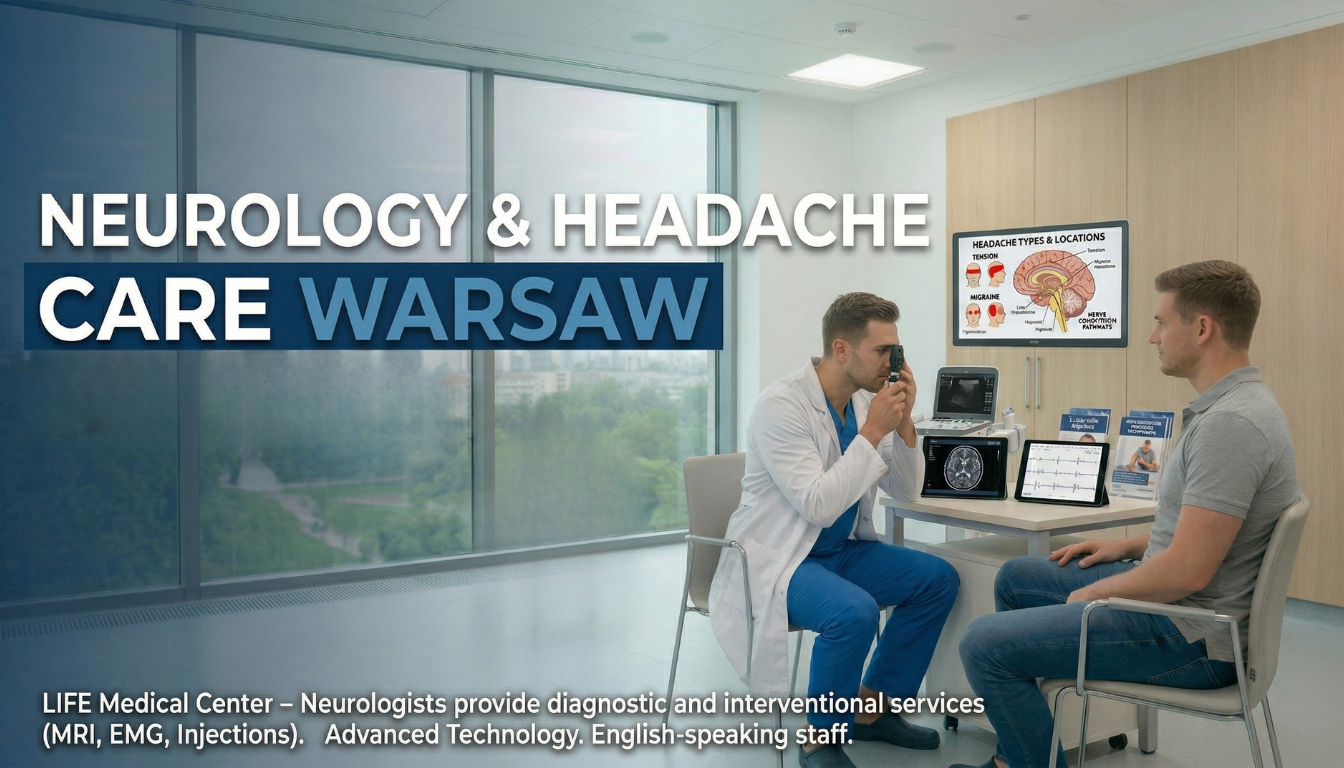
If you have new, severe, worsening, or suddenly onset headaches or unexplained numbness/tingling, see a neurologist promptly—especially with red flags like weakness, vision loss, confusion, or speech problems. At LIFE MEDICAL CENTER our English‑speaking neurologists provide evidence‑based assessment (neurological exam, brain/head MRI, EMG/nerve conduction studies) and personalized treatment while prioritizing patient safety.
| NEUROLOGY-RELATED SERVICES | ||
|---|---|---|
| Service | Type | Price |
| Neurosurgical Consultation | Consultation | from 600 zł |
| Root Block Injections | Treatment | from 2900 zł |
| Facet Joint Radiofrequency Thermolesion | Treatment | from 4500 zł |
| Botulinum Toxin for Migraine Treatment | Treatment | from 2500 zł |
*Prices are in accordance with the current LIFE Medical Center price list for 2026. Examinations are performed without the need for a medical referral.
Why does early neurological evaluation matter?
Early assessment by a neurologist can distinguish benign headaches or peripheral nerve problems from conditions that require urgent intervention, such as stroke, inflammatory neuropathy, or space‑occupying lesions in the brain. In a private setting in Warsaw you can often access a focused neurological examination, expedited brain/head MRI, and, when indicated, EMG/nerve conduction studies to reach an evidence‑based diagnosis and start appropriate treatment while ensuring patient safety.
Who is this information for?
This article is for adults aged 30–60 seeking private neurology care in Warsaw who are worried about headaches, recurrent migraines, or new/unexplained numbness and tingling in the hands or feet. If you search for “neurologist Warsaw”, “headache specialist Warsaw”, or “numbness hands doctor Warsaw”, this guide outlines when to seek care and what to expect.
How does Life Medical Center approach neurological care?
We follow evidence‑based medicine: diagnosis begins with a detailed history and targeted neurological examination, followed by selective testing (imaging, electrophysiology, labs) as indicated by clinical findings. Patient safety is central — informed consent, clear documentation, and rapid referral pathways to hospital care are in place for urgent situations.
When should I see a neurologist for headaches?
If you develop a new, severe, or rapidly worsening headache, or a headache with neurological symptoms (weakness, vision changes, confusion, speech difficulty, or loss of consciousness), seek prompt neurological assessment. For recurrent headaches, consider specialist review when attacks are frequent, disabling, or when first‑line treatments fail — this is common for migraine and chronic headache management in private neurology clinics.
What are the red flags that require urgent neurological assessment?
-
- Sudden onset “thunderclap” headache, peaking within seconds or minutes (possible subarachnoid haemorrhage).
-
- New focal neurological deficit — unilateral weakness, numbness, vision loss, or slurred speech (possible stroke or space‑occupying lesion).
-
- Altered consciousness, high fever with stiff neck, or rapidly progressive confusion (possible infection or encephalitis).
Any of these signs warrant urgent evaluation in an emergency setting; a neurologist can coordinate immediate imaging such as a head CT or brain MRI and hospital transfer when needed.
Which headache patterns indicate specialist care?
Frequent migraine attacks (several per month), progressive chronic daily headache, headaches causing work impairment, or suspected medication overuse headaches all merit specialist input. A headache specialist or neurologist can optimize acute treatment, consider preventive medications, and discuss procedures such as onabotulinumtoxinA (Botox) for chronic migraine.
What commonly causes numbness and tingling?
Numbness or paresthesia can come from peripheral nerve problems, nerve root compression, systemic disease, or central nervous system causes. Distinguishing peripheral from central patterns is a key role of the neurologist.
Could it be peripheral neuropathy, carpal tunnel, or radiculopathy?
Yes. Peripheral neuropathy (e.g., diabetic neuropathy) usually causes symmetrical numbness/tingling in feet and hands. Focal compression (carpal tunnel) causes hand paresthesia in a median nerve distribution. Radiculopathy from cervical or lumbar spine disease causes dermatomal numbness and may be associated with back or neck pain.
When are systemic or central causes like MS or stroke considered?
Sudden unilateral numbness, visual symptoms, or balance problems raise concern for stroke or demyelinating disease (multiple sclerosis). Progressive, asymmetrical sensory loss, or accompanying systemic features (weight loss, rash, autoimmune history) prompt blood tests, MRI brain/spine, and sometimes CSF or referral to other specialties.
How do neurologists diagnose headaches and numbness in Warsaw?
The diagnostic process is stepwise: thorough history, focused neurological examination, then targeted investigations tailored to the most likely causes. Access to brain/head MRI, EMG/nerve conduction studies, and laboratory testing is important for rapid diagnosis.
What does a comprehensive neurological examination include?
The exam evaluates mental status, cranial nerves (including visual fields and eye movements), motor strength, reflexes, coordination, gait, and sensory testing for touch, vibration, pain, and proprioception. This localises lesions to peripheral nerves, nerve roots, spinal cord, brainstem or cortex and guides subsequent testing such as MRI or EMG.
When is a brain MRI or head MRI necessary for headaches?
Brain MRI is indicated when headaches present with red flags (sudden severe onset, focal deficits, atypical features, or change in pattern), or when clinical suspicion for a structural lesion or demyelinating disease exists. For typical episodic migraine with normal exam, routine imaging is often not required; decisions are made case‑by‑case following evidence‑based guidelines.
What is an EMG or nerve conduction study and when is it needed?
Electromyography (EMG) and nerve conduction studies (NCS) assess peripheral nerve function and muscle response. They are useful when a peripheral neuropathy, radiculopathy, or entrapment neuropathy (e.g., carpal tunnel) is suspected. The tests help confirm localisation and severity and guide treatment or referral for procedures.
Which laboratory tests and referrals might be required?
Blood tests often include glucose/HbA1c (diabetes), TSH, vitamin B12, inflammatory markers (ESR/CRP), and autoimmune or infectious panels when indicated. Neurologists work with endocrinology, rheumatology, vascular medicine, and neurosurgery or neurophysiology for coordinated care.
What treatment options are offered in a private neurology clinic?
Private neurology clinics in Warsaw deliver evidence‑based medical therapy, procedural interventions, physiotherapy coordination, and multidisciplinary management plans tailored to individual needs.
How is migraine and chronic headache treated in a private clinic?
Treatment starts with accurate diagnosis and a plan including acute medications (triptans, NSAIDs), lifestyle modification, and preventive therapies (beta‑blockers, antiepileptics, antidepressants). For chronic migraine refractory to oral prevention, botulinum toxin injections and, where appropriate, calcitonin gene‑related peptide (CGRP) monoclonal antibodies are options. Procedures are performed with informed consent and documented safety measures.
What approaches help tension‑type headache?
Tension‑type headaches often respond to a combination of physiotherapy, structured exercise, posture correction, short‑term analgesics, and behavioral strategies like cognitive‑behavioral therapy or stress management. A private clinic can offer timely physiotherapy and referral to psychological support when needed.
How are neuropathy and nerve pain managed?
Management includes addressing underlying causes (e.g., optimizing diabetes control), neuropathic pain agents (gabapentin, pregabalin, duloxetine), topical treatments, physiotherapy, and in selected cases, interventional procedures or referral to pain/neurosurgery teams. Follow‑up is planned to monitor efficacy and side effects.
When is interventional or multidisciplinary care recommended?
When conservative measures fail or when structural compression is identified (severe radiculopathy, progressive weakness), referral to neurosurgery for consideration of procedures is appropriate. Complex cases benefit from coordinated care involving neurology, neurosurgery, pain specialists, physiotherapy, and when needed, psychological support.
What specialised services does LIFE MEDICAL CENTER provide?
At LIFE MEDICAL CENTER we offer English‑speaking access to neurological and neurosurgical expertise, and private‑sector pathways to expedited imaging (brain/head MRI) and electrophysiology (EMG/nerve conduction studies). Our team emphasizes evidence‑based diagnostics, clear communication, and patient safety throughout evaluation and treatment.
Do English‑speaking neurologists and international patient support work here?
Yes — our clinicians are available to consult in English, and administrative staff can assist with scheduling and documentation for international patients. We aim to make pathways to diagnosis and treatment clear and accessible for people searching “neurologist Warsaw English” or “english speaking neurologist Warsaw.”
What should I expect at my first neurology appointment in Warsaw?
Expect a detailed medical history focusing on onset, pattern, triggers, and associated symptoms, followed by a focused neurological exam. The neurologist will explain likely causes, order targeted tests if needed (brain MRI, EMG), discuss treatment options, and emphasize safety and follow‑up planning.
How quickly can I get a private appointment for new‑onset numbness or severe headache?
Private clinics typically offer faster access than public services; urgent cases with red flags are triaged for same‑day or next‑day assessment, and imaging can often be arranged rapidly in a private setting. For non‑urgent but concerning symptoms, appointments are usually available within days to weeks depending on demand.
Patient safety and quality — how are standards maintained?
We prioritise diagnostic accuracy, infection control, and informed consent. All procedures follow clinical protocols, documentation standards, and urgent referral pathways if hospital care is required. Treatments and tests are chosen based on clinical evidence and tailored to the patient’s condition and comorbidities.
Do neurologists in Warsaw manage stroke symptoms and Parkinson disease?
Yes. Neurologists and neurosurgeons evaluate stroke symptoms and coordinate urgent care including imaging and hospital transfer; long‑term management for Parkinson disease and other movement disorders is provided through specialist consultations and individualized treatment plans.
How is nerve pain and peripheral neuropathy evaluated and treated?
Evaluation includes clinical assessment, labs (glucose, B12), EMG/NCS when appropriate, and sometimes imaging. Treatment targets the underlying cause, symptomatic neuropathic pain control, physiotherapy, and referrals to pain specialists or neurosurgery when necessary.
Najczęściej zadawane pytania (FAQ)
When should I see a neurologist for headaches?
See a neurologist for new, sudden, or progressively severe headaches, or any headache accompanied by neurological signs such as weakness, vision loss, or speech changes. For frequent migraines that affect daily life, specialist review is recommended to consider preventive strategies.
What are red flags that require urgent neurological assessment?
Red flags include sudden severe headache, focal weakness or numbness, sudden vision problems, confusion, or loss of consciousness. These signs may indicate stroke, bleeding, or infection and require immediate emergency assessment.
Which tests will a neurologist in Warsaw order for numbness in hands or feet?
Common tests include targeted blood work (glucose, B12), nerve conduction studies and EMG to evaluate peripheral nerves, and brain or spine MRI if central causes are suspected. The clinician selects tests based on the exam findings.
Do English‑speaking neurologists work at LIFE MEDICAL CENTER?
Yes — LIFE MEDICAL CENTER offers consultations in English and support for international patients, helping with appointment scheduling and documentation.
Do I need a referral or is there a charge for consultations and tests?
You usually do not need a referral to access private neurology services or tests at LIFE MEDICAL CENTER. Fees apply for consultations and procedures — please call +48 22 255 32 55 for current prices and scheduling details.
Zadbaj o swoje zdrowie już dziś
Umów się na badanie: +48 22 255 32 55 | Lokalizacja: ul. Grzybowska 43a/U10, Warszawa.