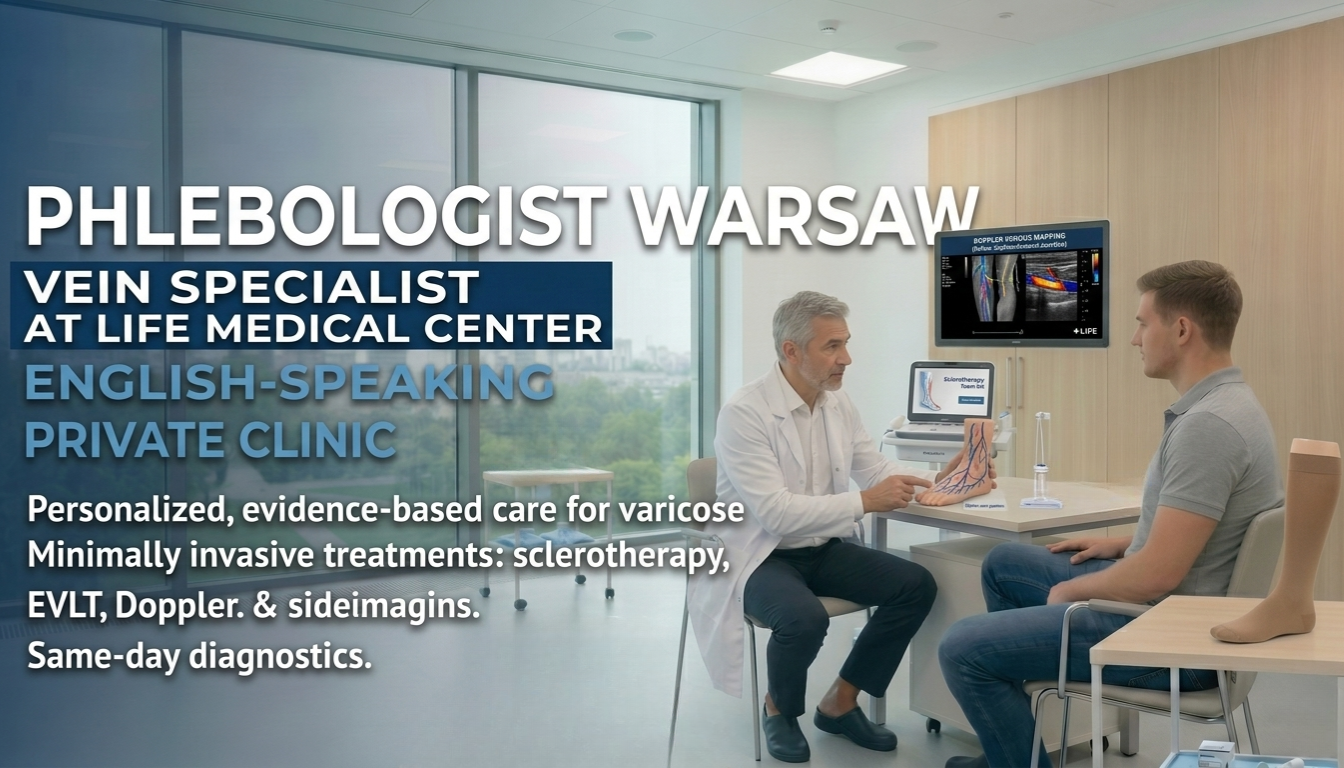
A phlebologist is a vein specialist who diagnoses and treats varicose veins and other venous diseases using evidence-based methods such as duplex (Doppler) ultrasound, sclerotherapy, EVLT and minimally invasive procedures. At Life Medical Center in Warsaw we provide English-speaking private consultations, same-day ultrasound diagnostics and personalized, safety-focused treatment plans. Our approach prioritises patient safety and guideline-based care for varicose veins and chronic venous disease.
| Phlebology | ||
|---|---|---|
| Service | Type | Price |
| Sclerotherapy Consultation & Qualification + Ultrasound | Examination | from 450 zł |
| Sclerotherapy | Treatment | from 750 zł |
| EVLT (Endovenous Laser Treatment) for Varicose Veins — 1 leg | Treatment | from 4500 zł |
| Doppler Ultrasound Service | Examination | from 330 zł |
| Phlebology Consultation | Consultation | from 300 zł |
*Prices are in accordance with the current LIFE Medical Center price list. Consultations are performed without the need for a referral.
Why should I see a phlebologist for vein problems?
Phlebologists are physicians trained to diagnose and treat venous disease including varicose veins, spider veins and chronic venous insufficiency. They use evidence-based diagnostics such as duplex (Doppler) ultrasound and provide options ranging from conservative care to sclerotherapy and endovenous procedures (EVLT, radiofrequency ablation). Seeing a specialist reduces unnecessary procedures and improves safety by tailoring treatment to the underlying venous anatomy.
Who is a phlebologist and what training do they have?
A phlebologist is a vein specialist (often with vascular surgery, dermatology or radiology background) who focuses on venous disorders and interventions. At Life Medical Center our vascular and phlebology teams follow guideline-based practice, perform duplex ultrasound (vein ultrasound, Doppler) and document informed consent and peri-procedural safety measures.
What common concerns do patients bring to a vein specialist?
Patients commonly report visible varicose veins, aching or heavy legs, swelling, night cramps, restless legs and cosmetic concerns such as spider veins. Important clinical risks include recurrent superficial thrombophlebitis and potential signs of deep vein thrombosis (DVT) — a phlebologist evaluates symptoms and arranges appropriate diagnostics.
When should I see a phlebologist?
Consult a vein specialist if you have symptomatic varicose veins (pain, swelling, skin changes) or signs of chronic venous insufficiency. If you notice sudden swelling, increasing pain, or redness and heat in a leg, seek urgent assessment because these may be red flags for DVT or an infected thrombophlebitis.
What are the red flags that require urgent assessment?
Red flags include sudden unilateral leg swelling, severe pain, breathlessness (possible pulmonary embolism), active skin ulceration or rapidly spreading redness. In these situations the phlebologist will prioritise Doppler ultrasound to exclude DVT and recommend immediate treatment when indicated.
When is a referral required to book a private phlebologist in Warsaw?
In private care you usually do not need a referral to book a phlebologist appointment at Life Medical Center. If you have previous scans or a GP letter, bring them to help clinical triage; otherwise an on-site duplex ultrasound can be arranged the same day in many cases.
What does a phlebologist diagnose and treat?
Phlebologists manage varicose veins, spider veins, chronic venous insufficiency, venous ulcers, superficial thrombophlebitis and coordinate diagnosis and management of deep vein thrombosis (DVT). Treatments range from compression therapy and lifestyle advice to sclerotherapy, endovenous thermal ablation (EVLT) and ambulatory phlebectomy depending on the disease stage and vein anatomy.
What is the difference between spider veins and varicose veins?
Spider veins (telangiectasias) are small, superficial vessels that primarily cause cosmetic concerns and can be treated with sclerotherapy or targeted laser. Varicose veins are larger, often symptomatic, and frequently caused by reflux in the saphenous system — these usually require duplex mapping and may need EVLT, radiofrequency ablation or ambulatory phlebectomy.
How is deep vein thrombosis (DVT) diagnosed and treated by a specialist?
DVT is diagnosed using duplex (Doppler) ultrasound and clinical probability scores; blood tests (D-dimer) are used selectively. Treatment typically includes anticoagulation and specialist follow-up; the phlebologist works with hematology and vascular medicine when needed to stratify risk and plan follow-up imaging.
What diagnostics do phlebologists use and why?
Clinical history and physical exam are combined with duplex (Doppler) ultrasound — the gold standard — for mapping reflux, obstruction and thrombosis. Venous mapping informs decisions about sclerotherapy vs endovenous treatments (EVLT, radiofrequency), and tests such as ABI or blood tests are used when arterial disease or thrombophilia is suspected.
How does duplex (Doppler) ultrasound work and why is it important?
Duplex ultrasound visualises vein anatomy and measures blood flow and valve function, identifying reflux or clots. Accurate venous mapping ensures the chosen intervention treats the source of symptoms, reducing recurrence and avoiding unnecessary surgery.
Do you offer same-day vein consultations and ultrasound in Warsaw?
Yes — Life Medical Center provides English speaking phlebologist consultations with same-day Doppler ultrasound in many cases, allowing a diagnosis and personalised treatment plan during one visit. This streamlines care and supports safe, evidence-based decision-making.
What are the treatment options from conservative to invasive?
Treatment is matched to symptoms and ultrasound findings. Conservative measures include compression therapy and exercise; interventional options include sclerotherapy for spider and small varicose veins, EVLT or radiofrequency ablation for refluxing saphenous veins, and ambulatory phlebectomy for larger surface varicosities.
What is sclerotherapy and is it safe?
Sclerotherapy injects a sclerosant into small veins to cause their collapse and resorption; it is effective for spider veins and small varicosities. Complications are uncommon when performed by trained specialists and include temporary bruising, pigmentation and very rarely superficial thrombosis; patients are counselled about expectations and aftercare.
What is EVLT and who is a candidate?
EVLT (endovenous laser treatment) uses thermal energy to close refluxing saphenous veins under ultrasound guidance. Candidates are patients with symptomatic reflux confirmed on duplex ultrasound; EVLT offers high symptom relief, short recovery and is considered a first-line endovenous option in many guidelines.
Is surgery still performed for varicose veins?
Surgical vein stripping is now less common. When indicated (complex anatomy, very large varices or combined pathology), ambulatory phlebectomy or staged combined procedures may be used. Phlebologists choose the least invasive, evidence-based approach that ensures safety and durability.
What outcomes, recurrence rates and risks should I expect?
Minimally invasive treatments such as EVLT and ultrasound-guided foam sclerotherapy show high initial success rates and acceptable recurrence profiles when the underlying reflux is adequately treated. Risks include bruising, numbness, infection (rare) and, very rarely, thromboembolic events; Life Medical Center uses infection control, ultrasound guidance and anaesthesia safety protocols to minimise complications.
Can varicose veins come back after treatment?
Recurrence can occur, especially if new reflux develops or not all refluxing segments were identified initially. Long-term follow-up and duplex checks help detect and treat recurrent disease early; lifestyle measures and compression may reduce symptom recurrence.
What should I expect during a first phlebology consultation at Life Medical Center?
Your first visit includes a detailed history, clinical exam and duplex ultrasound mapping when indicated. The phlebologist will explain findings, discuss evidence-based options (compression, sclerotherapy, EVLT, RF ablation, phlebectomy), outline risks and expected recovery, and provide a personalised, safety-focused plan.
How is recovery and return-to-work managed after minimally invasive vein treatment?
Most patients resume normal activities quickly; walking is encouraged immediately after EVLT, and compression stockings are commonly recommended for a few days to weeks depending on the procedure. Pain is usually mild and controllable with simple analgesics; precise return-to-work guidance will be tailored to the intervention and job demands.
How do I book a private phlebologist appointment in Warsaw and what should I bring?
You can book online or by phone; no referral is generally required. Bring any prior imaging, a list of medications, and details of symptoms. For English-speaking care request an English speaking phlebologist at booking.
Najczęściej zadawane pytania (FAQ)
When should I see a phlebologist?
See a phlebologist if you have aching, swelling, visible varicose veins, skin changes or persistent leg ulcers. Early assessment with duplex ultrasound helps plan effective treatment and reduces complication risk.
What does a phlebologist treat?
Phlebologists treat varicose veins, spider veins, chronic venous insufficiency, venous ulcers and thrombophlebitis. They use diagnostics like vein ultrasound and evidence-based treatments such as sclerotherapy and EVLT.
Are varicose veins dangerous?
Most varicose veins are not life-threatening but can cause pain, skin changes and ulceration if untreated. They can also be associated with superficial thrombosis; a specialist evaluation determines appropriate management.
How much does a phlebology consultation and diagnostics cost and do I need a referral?
Private consultation prices at Life Medical Center start from the listed consultation fees (for example 300 zł without USG, 450 zł with USG), and a Doppler scan is available on site. A GP referral is not required for private appointments.
What diagnostic tests will I have during the visit (vein ultrasound, Doppler)?
Most patients receive a duplex (Doppler) ultrasound to map reflux and anatomy; this is the diagnostic gold standard. Additional tests such as ABI or blood tests are ordered only if clinically indicated.
What are the minimally invasive treatments for varicose veins and what is recovery like?
Common minimally invasive treatments include ultrasound-guided foam sclerotherapy, endovenous laser treatment (EVLT) and radiofrequency ablation. Recovery is usually quick; walking is encouraged and compression stockings are commonly recommended for a period after the procedure.
Do you offer English speaking phlebologist consultations in Warsaw?
Yes. Life Medical Center provides English-speaking consultations and care coordination for international patients, including same-day ultrasound diagnostics when available.
Take care of your health today.
Book your appointment: +48 22 255 32 55 | Location: Grzybowska 43a/U10, Warsaw.